
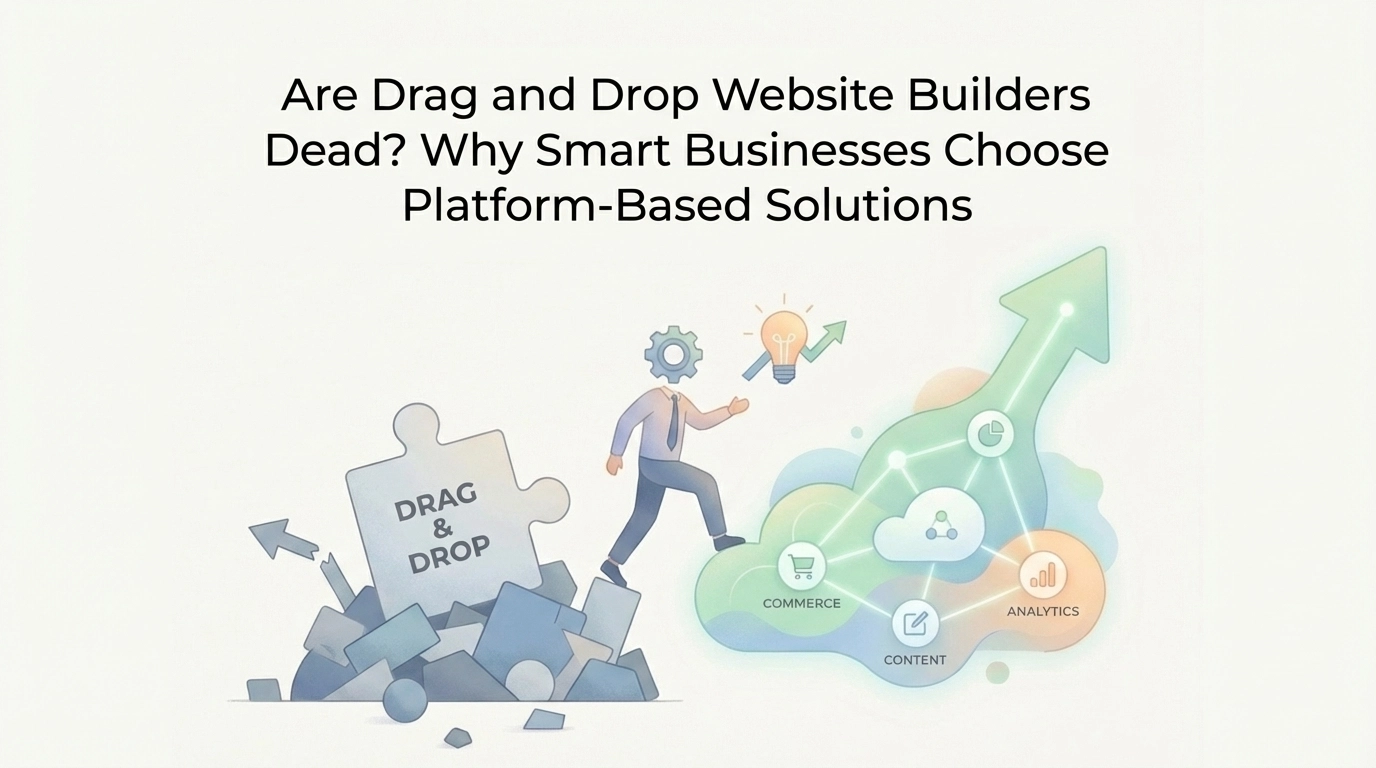
Let's get one thing straight: drag and drop website builders aren't dead. Far from it! They're still buzzing with activity in 2026, powering millions of websites across the globe. But here's the plot twist – while these builders are very much alive, the conversation has evolved dramatically.
The real question isn't whether drag and drop website builders are dead. It's whether they're still the smartest choice for businesses that actually want to grow and thrive online. Spoiler alert: for many smart businesses, the answer is becoming a resounding "no."
The Current State: Drag and Drop Builders Are Everywhere
Walk into any coffee shop, and you'll probably overhear someone talking about building their website on Wix, Squarespace, or one of the other popular drag and drop website builder platforms. These tools have democratized web design in ways we couldn't have imagined a decade ago.
And honestly? That's pretty amazing! The ability for anyone to create a website without coding knowledge has opened doors for countless entrepreneurs, artists, and small business owners. These platforms excel at getting you online quickly, often within hours of signing up.
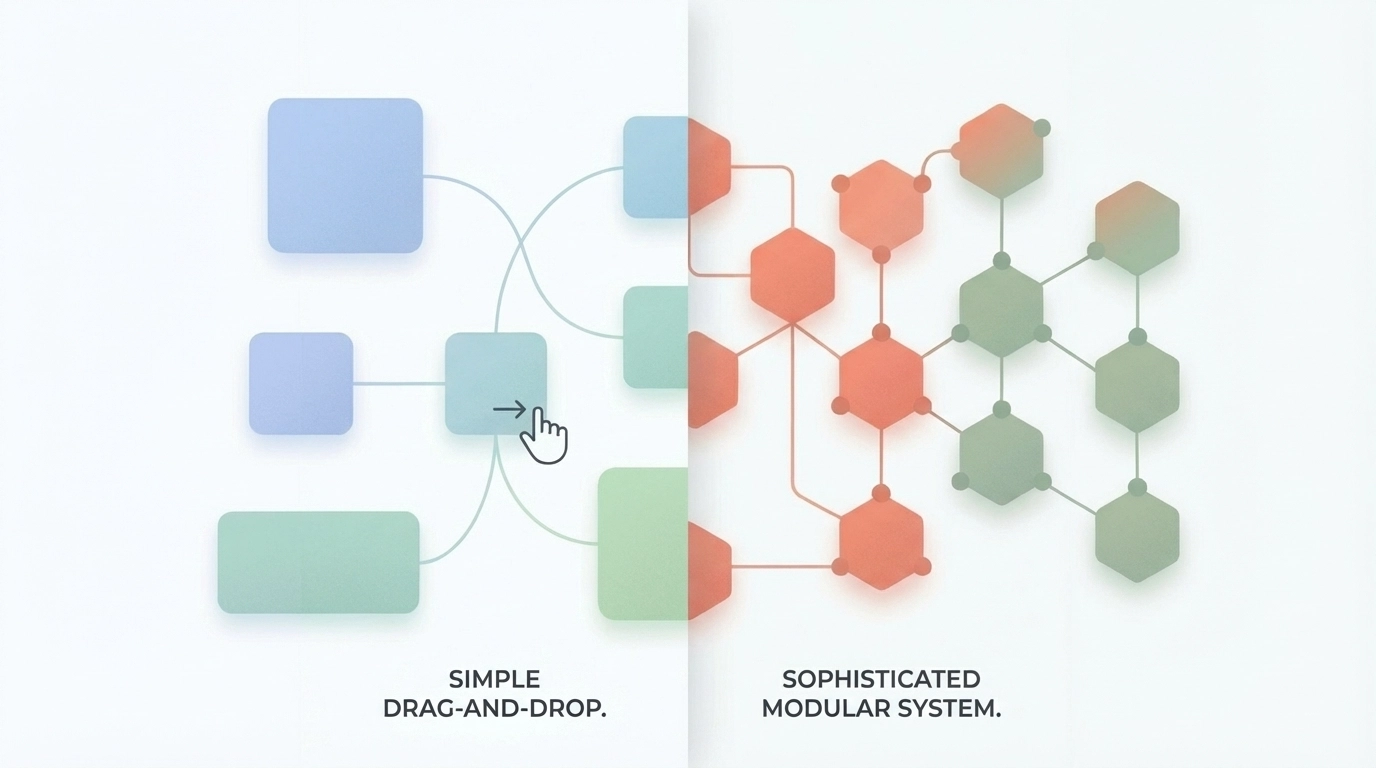
But here's where things get interesting. As businesses grow and their needs become more sophisticated, many are discovering that what got them started isn't necessarily what will take them to the next level.
Where Drag and Drop Builders Shine (And Where They Don't)
The Sweet Spot: Drag and drop builders are fantastic for getting off the ground fast. Need a portfolio site for your photography business? Perfect. Want to showcase your local bakery's menu and hours? Absolutely ideal. These platforms offer simplicity, built-in hosting, and templates that look professional right out of the box.
The Growing Pains: But as your business evolves, you start bumping into walls. Want a custom feature that's not in their template library? Sorry, not possible. Need to integrate with a specific third-party service? You might be out of luck. Planning to migrate to a different platform as you scale? Good luck rebuilding everything from scratch.
The most frustrating part? You're essentially renting your website's functionality. If the platform decides to change something, remove a feature, or adjust their pricing model, you're along for the ride whether you like it or not.
The Evolution to Platform-Based Solutions
This is where website platform solutions come into play, and they're changing the game entirely. Instead of being locked into one company's vision of what your website should be, platform-based solutions give you the flexibility and control you need while maintaining the ease of use you love.
Think of it like this: traditional drag and drop builders are like living in a fully furnished apartment. Everything's ready to go, but you can't change the layout or add custom features. Platform-based solutions are more like having your own home with a team of expert contractors who can build exactly what you need.

Why Smart Businesses Are Making the Switch
Vendor Lock-In is Real One of the biggest wake-up calls for growing businesses is realizing they're trapped. When you build on a proprietary drag and drop platform, your website becomes inseparable from that platform. There's no export button for your hard work – if you want to leave, you're essentially starting over.
Scalability Hits Different What works for a 5-page website doesn't necessarily work for a 500-page website with complex functionality. As businesses grow, they need solutions that can grow with them, not platforms that limit their potential.
The Hidden Costs Add Up While drag and drop builders often start cheap, the costs can spiral quickly. Need more storage? That's extra. Want advanced SEO features? Premium plan required. Custom domain? More money. Before you know it, you're paying enterprise prices for basic functionality.
Performance Matters More Than Ever Google's algorithm updates have made website speed and performance crucial for SEO success. Many traditional website builder platforms struggle with performance optimization because they're built to be everything to everyone, resulting in bloated code and slow loading times.
Enter the New Generation: Platform-Based Solutions
This is where solutions like Fido are absolutely crushing it. Instead of forcing you into a one-size-fits-all approach, modern website platforms are built around flexibility, performance, and genuine scalability.

The Communal Codebase Advantage Here's what's brilliant about Fido's approach: instead of every website being built from scratch, there's a communal codebase that constantly improves. When one component gets better, everyone benefits. It's like having a development team that never sleeps, continuously optimizing and updating your website's foundation.
Configurable Web Components Rather than being stuck with pre-made templates, you get configurable components that can be tailored to your exact needs. Need a contact form with specific fields? Done. Want an image gallery with custom filtering? No problem. It's the flexibility of custom development with the simplicity of drag and drop.
Predictable Pricing That Actually Makes Sense Remember those surprise costs we mentioned? Platform-based solutions like Fido offer predictable monthly billing without hidden fees or sudden price jumps. You know exactly what you're paying for, and you can budget accordingly.
Easy Administration Without the Headaches Managing a website shouldn't require a computer science degree. Modern platforms make administration intuitive while giving you the power to make real changes when you need them.
The Security and Performance Edge
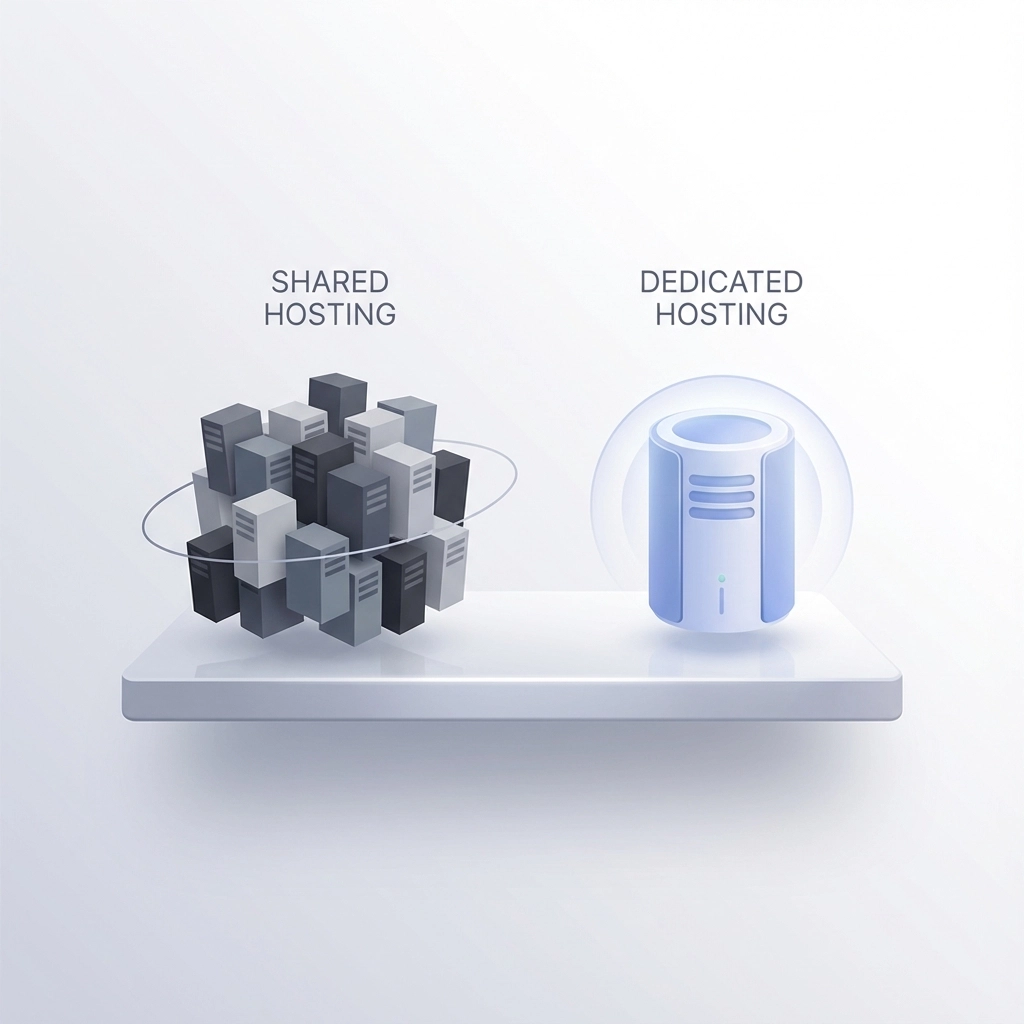
Here's something that often gets overlooked: secure website hosting and performance optimization. When you're on a shared drag and drop platform, you're at the mercy of everyone else's websites on the same servers. If someone else's site gets compromised or starts hogging resources, it can affect your site's performance.
Platform-based solutions typically offer dedicated hosting environments that are optimized specifically for performance and security. Your website isn't competing with thousands of others for resources.
Making the Smart Choice for Your Business
So, are drag and drop website builders dead? Not exactly. But for businesses that are serious about growing online, the limitations are becoming harder to ignore.
The smartest businesses are recognizing that their website isn't just a digital brochure – it's a critical business asset that needs to be powerful, flexible, and built for growth. They're choosing platform-based solutions that offer the best of both worlds: the ease of use they love with the power and flexibility they need.
When to Stick with Drag and Drop: - You need something online immediately - Your needs are simple and unlikely to change - Budget is the primary concern - You're not planning significant growth
When to Choose a Platform-Based Solution: - You're planning to scale your business - You need custom functionality - Performance and SEO are priorities - You want ownership and control over your digital presence
The Future is Platform-Based
The writing's on the wall. As businesses become more sophisticated in their digital strategies, they're demanding solutions that can keep up with their ambitions. Platform-based solutions aren't just meeting that demand – they're exceeding it.
If you're ready to move beyond the limitations of traditional drag and drop builders and want a website platform that grows with your business, it might be time to explore what modern solutions like Fido can offer.
Ready to see what a truly flexible, powerful website platform looks like? Check out how Fido works and discover why smart businesses are making the switch to platform-based solutions that actually understand what growing companies need.
The future of web development isn't about choosing between easy and powerful – it's about having both. And that future is already here.