
![[HERO] Why "Easy" Isn't Enough: Turning Your Simple Site Into a Web Development Powerhouse](https://cdn.marblism.com/IVyh4Cc3ulb.webp)
Let's be honest for a second. Every easy website builder out there is screaming the same thing: "Build your site in minutes! No coding required! So simple your grandma could do it!"
And look, they're not lying. You can build a site in minutes. You can drag and drop your way to something that looks decent on launch day.
But here's the question nobody's asking: What happens on day 91? Or day 365? What happens when your business actually grows?
That's when "easy" starts to feel a lot like a trap.
The Dirty Secret Behind "Easy"
Here's the thing about most easy website builders, they're designed to get you in the door, not to help you thrive once you're inside. They nail the first impression. The templates are gorgeous. The onboarding is smooth. You feel like a web development genius for about 48 hours.
Then reality hits.
You want to add a feature that isn't in their pre-approved list. Sorry, can't do that. You need your site to handle more traffic because your marketing is actually working. That'll cost you extra. You want to customize something beyond changing the font color? Time to hire a developer who'll tell you the platform won't let them do what you need.

The problem isn't that these platforms are bad at being easy. They're great at being easy. The problem is that easy was the whole plan. There's no Phase 2. No growth path. Just a pretty box that gets smaller the bigger your ambitions get.
When Your Business Outgrows Your Website
Let's paint a picture. You launched your site six months ago. Things are going well, maybe too well. Now you need:
- A more sophisticated eCommerce setup because you're selling more products
- Better forms and data collection for your growing email list
- Custom functionality that matches how your business actually operates
- A responsive website builder approach that doesn't break on every new device
- Integration with the tools your team uses daily
You go to your "easy" platform and... crickets. Or worse, you get a message that says "upgrade to our enterprise plan" with a price tag that makes your eyes water.
This is the moment most businesses face a brutal choice: stay stuck in a platform that's holding them back, or burn everything down and start over somewhere else.
Neither option is great. And honestly? Neither should be necessary.
The Real Question: Why Can't Easy Also Be Powerful?
Here's where we need to flip the script. The web development world has convinced us that there's a tradeoff, you either get easy or you get powerful. Pick one.
But that's a false choice. It's like saying you can have a car that's reliable or fast. Sure, maybe that was true in 1985. But it's 2026. We can do better.
The real question isn't "easy vs. powerful." It's: How do we build something that starts simple and scales into a powerhouse without requiring you to abandon ship?
That's the question we obsess over at Fido.
Building a Web Development Platform That Actually Grows With You

We're not going to pretend we're the only web development platform out there. We're not even going to pretend we're perfect. But we are going to tell you what makes our approach different: we built Fido to be easy on day one and powerful on day 1,000.
How? Two words: communal codebase.
Here's what that means in plain English. Instead of every Fido site being an isolated island, every site benefits from the same underlying foundation. When we improve something, whether it's performance, security, or a shiny new feature, everyone gets it. Your site doesn't get left behind because you didn't pay for the premium tier.
Think of it like living in a neighborhood where everyone chips in to keep the roads nice, the streetlights working, and the parks looking great. You get the benefits of collective investment without having to build everything yourself.
Learn more about how our communal codebase works.
Configurable Components: The Building Blocks That Scale
Okay, let's get specific. Because "scales with you" is a nice phrase, but what does it actually look like?
It looks like configurable components.
With Fido, you're not locked into rigid templates where you can rearrange the deck chairs but can't touch the ship. You get access to components that are designed to work together, look great, and, here's the key part, actually do things.
Accordions that organize complex information without overwhelming your visitors. eCommerce tools that handle transactions without nickel-and-diming you on every sale. Stats and spotlight sections that make your wins look as impressive as they actually are. (Seriously, check out our spotlight and stats components, they're kind of a big deal.)
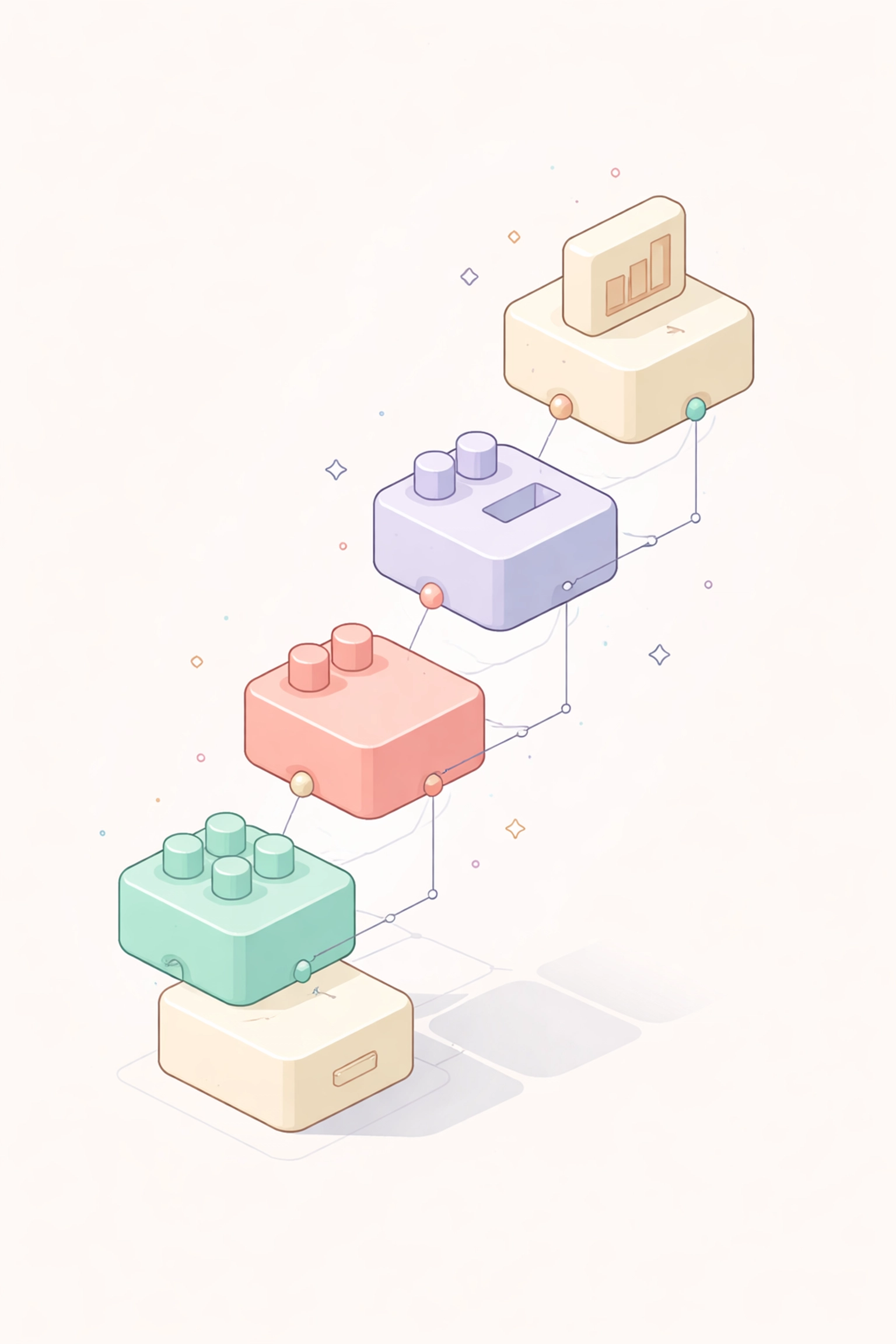
These aren't just pretty widgets. They're functional building blocks that you can configure, combine, and customize as your needs evolve. Start with a simple brochure site. Add eCommerce when you're ready to sell. Build out a resource library when your content strategy matures. Your platform grows with your vision, not the other way around.
Responsive by Default, Not as an Afterthought
Can we talk about responsive design for a second? Because some platforms treat mobile optimization like it's 2012 and smartphones are still a novelty.
A responsive website builder isn't a nice-to-have anymore. It's table stakes. More than half your visitors are probably on their phones right now. If your site looks janky on mobile, you're losing people before they even give you a chance.
Every Fido component is built responsive from the ground up. We don't slap a mobile version on top and call it a day. The experience works seamlessly across devices because that's how the modern web should function. Period.
The Honest Comparison
Look, we're not going to trash talk other platforms. (Okay, maybe a little.) But if you want a real breakdown of how different approaches stack up, we wrote a pretty honest comparison of Wix vs. Squarespace vs. Fido. No spin, just facts.
And if you're curious whether drag-and-drop builders still make sense in 2026, we tackled that question too: Are drag and drop website builders dead?
Spoiler: they're not dead, but they've definitely evolved.
What "Powerhouse" Actually Looks Like
Let's bring this home with a real example. Loft Co Insurance came to Fido needing more than a pretty face. They needed a site that could handle complex information, build trust with potential clients, and actually convert visitors into customers.
We didn't give them a template and wish them luck. We gave them a foundation they could build on: configurable components, a responsive layout, and the flexibility to grow as their business expanded.

That's what a powerhouse looks like. Not flashy gimmicks. Not empty promises. Just a solid web development platform that gets out of your way and lets you build something real.
Ready to Outgrow "Easy"?
Here's the bottom line: "Easy" got you in the door. But easy alone won't get you where you're going.
You deserve a platform that respects your ambition. One that gives you simplicity when you need it and power when you're ready for it. One that treats growth as the goal, not a problem to be monetized.
That's what we're building at Fido. And we'd love to show you how it works.
Because your website shouldn't be a ceiling. It should be a launchpad.